


- August 14, 2026
- BELONGING JAPAN
A Japanese summer festival, or natsu matsuri, is one of the easiest ways to feel part of local life once you live here. You hear the drums, follow the lanterns, and suddenly you are standing in a crowd of neighbors you have never met.
But if you did not grow up with these festivals, the real question is not what to see — it is how to behave. Can you join the dance? Is it rude to take photos? What to wear? This guide focuses on the practical side, the etiquette and the small habits, so you can walk in relaxed and enjoy the night.
Table of Contents
About the Writer
Writer
Editor Team
Written by the belongingJAPAN editorial team, led by founder Ai — a Japanese professional who spent nearly a decade living abroad, bringing a both-sides view of Japanese customs.
For other topics, the site collaborates with certified experts and industry professionals to ensure accurate, reliable, and up-to-date information across travel, lifestyle, finance, and healthcare.
Chapter 1: What is a Japanese summer festival (matsuri)?
A matsuri is a community festival, often tied to a local shrine or to the Obon season in mid-August. Some are tiny, held in a single neighborhood park. Others fill an entire town.
Most summer festivals mix a few familiar elements: food stalls (yatai), a bon odori dance circle, portable shrines (mikoshi) carried through the streets, and sometimes fireworks. You do not need to understand every ritual to take part. Watching respectfully is completely normal, even for Japanese people who are just visiting.
If your festival falls during the Obon period, it helps to know the background. See our guide to the Obon holiday for why this season matters.
Related Post

When and where to find one
Summer festival season runs from roughly early July through the end of August, with a peak around Obon in mid-August.
The big fireworks festivals are easy to find online. The smaller, friendlier ones are not always advertised in English. A few ways to find the local ones:
- Check your city or ward website (search your city name plus matsuri or 祭り).
- Look at the notice board outside your nearest shrine.
- Watch for posters at the station, the shotengai (shopping street), and the supermarket.
- Ask a neighbor or a coworker — people are usually happy to point you to their favorite.
The small neighborhood festivals are often the best. They are calmer, cheaper, and far more welcoming than the huge crowds downtown.

This is the part most guides skip, and the part that actually helps. None of it is complicated. It is mostly about reading the room and being considerate.
At the shrine and with the mikoshi
If the festival is based at a shrine, treat the grounds with basic respect. Keep your voice down near the main hall. If you want to pray, our guide on how to pray at a Japanese shrine covers the simple steps.
When a mikoshi (portable shrine) is carried past, give it space. The teams carrying it move fast and cannot stop easily. Do not touch a mikoshi unless you have clearly been invited to help carry it — in some neighborhoods visitors are welcome to join, but always ask first.
Can you join the bon odori?
Yes. The bon odori dance circle is open to everyone, and foreigners are genuinely welcome to join.
You do not need to know the steps. Slot into the outer ring, watch the person in front of you, and copy along. Everyone is a little out of sync, and that is part of the fun. If you would rather watch the first round to learn the moves, that is fine too.
Photos, space, and crowds
Photos of the general scene are fine. For close-ups of individual people — especially children who are not yours — ask first or keep your distance. It is polite, and it avoids awkward moments.
Do not save large spaces with tarps unless the festival clearly allows it. At fireworks events, some areas fill up early; arrive earlier rather than blocking a spot for hours. Keep walkways clear, and move to the side if you stop to eat or take a picture.
Trash and clean-up
Japan runs on a “take your trash home” culture, and festivals are no exception. Bins may be few and overflowing. Carry a small plastic bag, hold on to your rubbish, and sort it if separated bins are provided. Leaving a clean space is one of the quiet ways you show respect for the neighborhood hosting the event.
Chapter 3: Practical tips for surviving a summer festival
A summer festival is a wonderful night out, but the heat, the cash-only stalls, and the crowds catch a lot of newcomers off guard. A little preparation goes a long way.
Cash and the food stalls
The food is a highlight — takoyaki, yakisoba, grilled ikayaki squid, cool kakigori shaved ice. But here is the tip that matters most: most stalls take cash only, and often only small bills and coins.
Bring more small change than you think you need. Lines move faster when you have the right money ready. Eat to the side rather than walking through the crowd with food, and hold your trash until you find a bag or bin. If you have allergies, note that stall food rarely lists ingredients, so ask or choose simple items you recognize.

Beating the heat
Even in the evening, Japanese summers are hot and humid. Heatstroke is a real risk in a packed festival.
Drink water before you feel thirsty, and keep a bottle with you. A small towel and a hand fan help. If you start to feel dizzy, step out of the crowd and into the shade or an air-conditioned convenience store. For more on staying safe in the heat, see our guide to surviving summer in Japan.
Related Post
Mosquitoes and bug bites
Summer evenings by a shrine or a riverbank mean one more thing: mosquitoes. They are most active at dusk, exactly when festivals get going.
Apply repellent before you leave home, and reapply if you sweat it off. Loose long sleeves help if you are staying late. If you are bringing small children, cover their arms and legs and choose a repellent suited to their age. For product types and what actually works in Japan, see our guide to insect repellent in Japan.
Related Post
Crowds, trains, and getting home
The crowd is heaviest right after the fireworks finale. Stations get packed, and lines form fast.
Charge your IC card (Suica or PASMO) before you go, so you are not stuck at a ticket machine with hundreds of other people. If you can, wait twenty or thirty minutes for the first rush to clear before heading to the station. Agree on a meeting point with your group in advance, in case you get separated and the phone network is slow.
Chapter 4: Bon odori and fireworks at a glance
Two things turn a good festival into a memorable one: the bon odori dance and the fireworks (hanabi).
Both the dance and the fireworks are highlights in their own right — the bon odori is participatory, so step in and join, and the fireworks are the spectacular grand finale at many summer events.
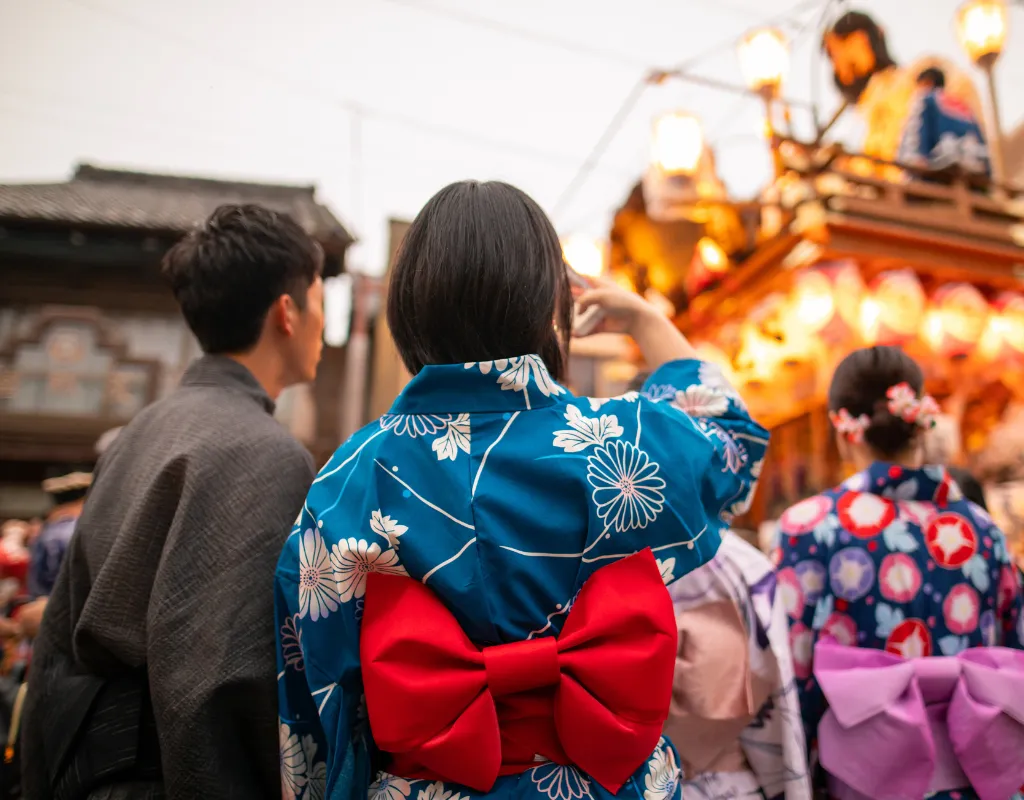
One gentle note on clothing: you do not need a yukata to attend. Everyday clothes are completely fine. A yukata is simply a fun option if you want to lean into the occasion.

Frequently Asked Japanese summer festival
Do I need to wear a yukata to a summer festival?
No. A yukata is optional, not required. Plenty of people come in everyday summer clothes. If you would like to try one, it is a lovely way to enjoy the night — just choose whatever feels comfortable in the heat.
Can foreigners join the bon odori dance?
Yes, and you are genuinely welcome. Step into the outer ring of the circle and copy the person in front of you. No one expects you to know the steps, and getting them slightly wrong is part of the fun.
Is cash needed at festival food stalls?
Usually, yes. Most yatai stalls take cash only, and often prefer small bills and coins. Bring more small change than you expect to spend so you are not caught out.