


- September 9, 2026
- BELONGING JAPAN
Okaeshi — the return gift — is one of those customs that quietly catches foreign residents in Japan off guard. You get a lovely present for your wedding or new baby, you say a warm thank-you, and you assume that’s that. Then, a few weeks later, a Japanese friend gently asks what you’re sending back.
For formal occasions, a return gift is often expected, but customs vary by the occasion, your relationship with the giver, and family or regional traditions. This guide walks through the most common situations — how much, when, and what to give — so the custom feels natural instead of nerve-wracking.
Table of Contents
About the Writer
Writer
Editor Team
Written by the belongingJAPAN editorial team, led by founder Ai — a Japanese professional who spent nearly a decade living abroad, bringing a both-sides view of Japanese customs.
For other topics, the site collaborates with certified experts and industry professionals to ensure accurate, reliable, and up-to-date information across travel, lifestyle, finance, and healthcare.
Chapter 1: What is okaeshi, and why does it catch foreigners out?
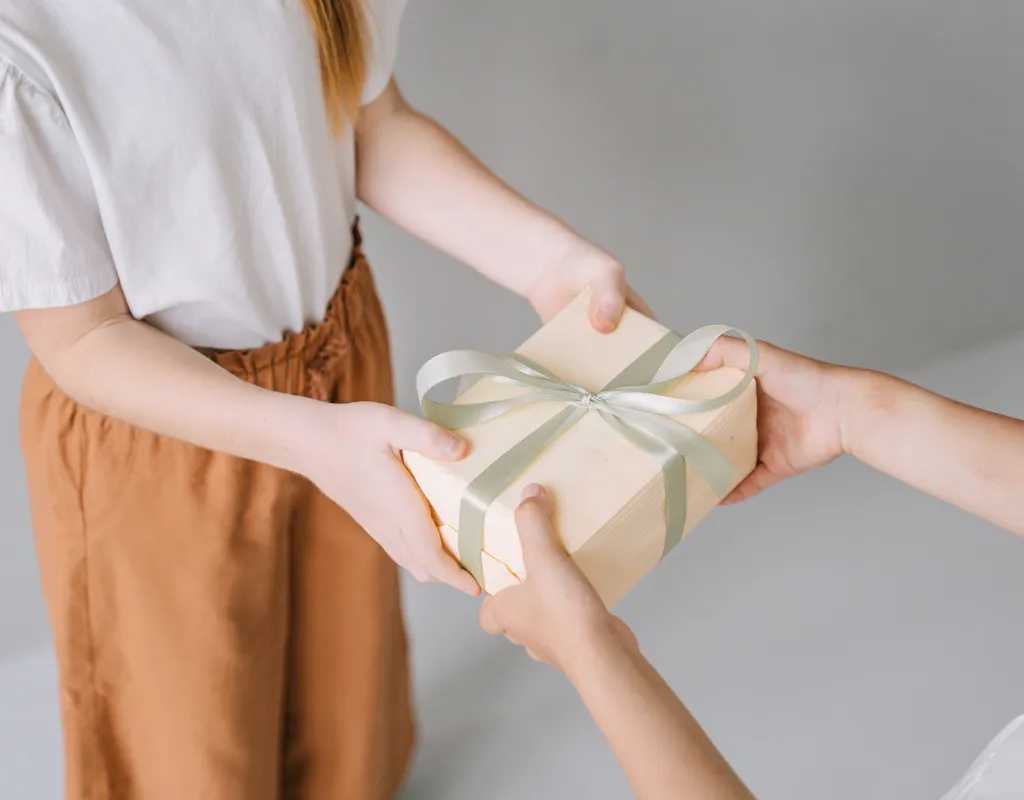
Okaeshi (お返し) simply means “return gift.” When someone gives you a present — especially for a milestone — there’s an unspoken expectation to give something back. It isn’t a cold, tit-for-tat exchange. Think of it as completing a small circle of kindness: a gesture that leaves everyone feeling the moment was mutual, not one-sided.
If you come from a culture where a heartfelt thank-you is plenty, this can feel like a lot at first. But once you see it as part of how people here keep everyday relationships warm and even, it stops feeling like a rule and starts to feel natural.

okaeshi vs uchiiwai
Here’s a subtlety most guides skip — and one your Japanese friends will quietly notice you getting right.
For happy occasions, like a wedding or a new baby, the return gift is usually called uchiiwai (内祝い). The word carries the idea of sharing your happiness with the people around you. In everyday conversation, people may still use okaeshi to mean a return gift, but uchiiwai is the more appropriate term for many celebration gifts and for the wording on the gift label. Get-well and funeral situations have their own terms, which we’ll come to.
The words you'll see
You’ll spot these on gift labels, at department-store gift counters, and in messages from Japanese friends. Here they all are in one place.
| English | Kanji | Romaji |
|---|---|---|
|
Return gift (general) |
お返し |
okaeshi |
|
Celebration return gift |
内祝い |
uchiiwai |
|
Wedding return gift |
結婚内祝い |
kekkon uchiiwai |
|
New-baby return gift |
出産内祝い |
shussan uchiiwai |
|
Get-well return gift |
快気祝い |
kaiki iwai |
|
Condolence return gift |
香典返し |
koden-gaeshi |
|
“Half return” guideline |
半返し |
hangaeshi |
|
Congratulatory money |
ご祝儀 |
goshugi |
|
Condolence money |
香典 |
koden |
|
Get-well visit gift |
お見舞い |
omimai |
|
Decorative gift label |
のし |
noshi |
The half-return rule (hangaeshi)
As a rule of thumb, you return something worth about one-third to one-half of what you received. This is known as hangaeshi (半返し), or “half return.” So for a ¥10,000 gift, sending back around ¥3,000–5,000 is normal.
Two things are worth knowing. First, you’ll need a rough sense of what the original gift cost — a little awkward, but just do your best to estimate. Second, the rule bends. When someone senior gives you something generous, returning a full half can look like you’re trying to wipe out their kindness, so around a third usually feels more gracious.

What’s right really does depend on the occasion. Here’s the breakdown.
Weddings (kekkon uchiiwai)
If guests attend your wedding, the gift bag they take home from the reception — the hikidemono (引き出物) — generally serves as the gift for guests. You do not normally send a separate wedding uchiiwai to those guests simply for attending.
The people to watch are those who could not attend but still sent a gift or money. For them, send a wedding uchiiwai worth about one-third to one-half, generally within a month. So a ¥20,000 gift might mean roughly ¥6,000–10,000 back; for a large ¥100,000 gift from a relative or someone senior, around one-third (¥30,000) may be more appropriate than a full half. A short thank-you note is also a thoughtful touch. For the giving side of weddings, see our guide to Japanese wedding gift money.

A new baby (shussan uchiiwai)
When people give a baby gift (oiwai), you send back a shussan uchiiwai worth about a third to a half. A common timing is around one month after the baby’s birth, although gifts received later can be returned after you receive them. For a generous gift from parents or someone senior, around one-third may be appropriate.
There’s a lovely twist here: baby uchiiwai often doubles as a name announcement, with the child’s name and its reading printed on the noshi label. It’s a warm touch, not just a formality.
Get-well and recovery (kaiki iwai)
If people sent a get-well gift (omimai) while you were ill or injured, you return one once you’ve recovered — again, about a third to a half. As a practical guide, aim to send it within about one to two weeks after recovery or discharge, rather than waiting too long. The timing itself is the message: it tells everyone you’re well again.
For this one, people lean toward “things that disappear” — consumables like sweets, tea, or soap — so that, symbolically, the illness doesn’t linger. Once you’ve fully recovered, the label reads 快気祝 (kaiki iwai).
Funerals and condolences (koden-gaeshi)
If you received condolence money (koden) at a funeral, the return is koden-gaeshi — usually a third to a half of the amount. Traditionally it’s sent after the 49-day mourning period, though a same-day return (sokujitsu-gaeshi) handed over at the funeral itself is now common. Consumables and catalog gifts are the norm. Our Japanese funeral etiquette guide covers the wider customs around koden.
Chapter 3: What to give (safe, appreciated choices)
When you’re not sure, reach for consumables — “things that disappear” (kieru mono) once they’re used. They’re safe precisely because they don’t stick around as clutter or obligation. Reliable choices:
Nice sweets, tea, or coffee
Good towels or everyday household items
Alcohol, if you know they drink
A catalog gift (katarogu gifuto), which lets the recipient pick their own item — a popular modern option that takes the guesswork out of it
A few to steer clear of: anything too personal, anything that looks cheap next to what you received, and — at weddings especially — items linked to “cutting” or “separating.” When in doubt, a department-store gift counter will point you the right way.
Chapter 4: Noshi and wrapping: the part that signals you "get it"
In Japan, how a gift is presented matters as much as what’s inside. Return gifts come wrapped with a noshi (のし) label and mizuhiki (水引) cords, and the details quietly announce the occasion:
Celebrations (wedding, baby): red-and-white cords. Weddings use a knot that can’t be retied (musubikiri) — “once is enough.” Baby celebrations use a bow you can retie (choumusubi), since this is joy you’d gladly repeat.
Condolences: black-and-white (or yellow-and-white) cords, tied in a musubikiri knot.
You don’t need to master any of this yourself. Just tell the shop the occasion and they’ll handle the correct noshi and wording — you only need to know enough to ask.

FAQ on Okaeshi Japan
Do I really have to give a return gift in Japan?
For formal or milestone gifts, a return gift is often expected, but it is not an absolute rule for every situation. Family customs, the occasion, the amount, and your relationship with the giver can all matter. For casual gifts or small gestures, a heartfelt thank-you may be enough. When you’re unsure, ask someone familiar with the family or occasion.
How much should the return gift be?
About a third to a half of what you received — the “half return,” or hangaeshi. If someone senior gives you something very generous, closer to a third often feels more gracious than an exact half.
What should I give, and how soon?
Consumables are the safe bet: sweets, tea, good towels, or a catalog gift they pick themselves. For weddings and new babies, a common guideline is to send the gift within about a month, with timing adjusted to the occasion. For celebration gifts, the label will usually use uchiiwai rather than the general term okaeshi.
Price guidance in this article is based on Japanese department-store and gift-retailer etiquette guides. Amounts are general guidelines; regional and family customs vary.
Source: Takashimaya, “Shussan Uchiiwai: Price Guidelines, Timing, and Basic Etiquette”
Source: Harmonick, “What Is the Typical Amount for a Wedding Return Gift (Kekkon Uchiiwai)?”
Source: Shaddy, “How Much Should a Return Gift Be? Price Guidelines and Basic Etiquette by Occasion”