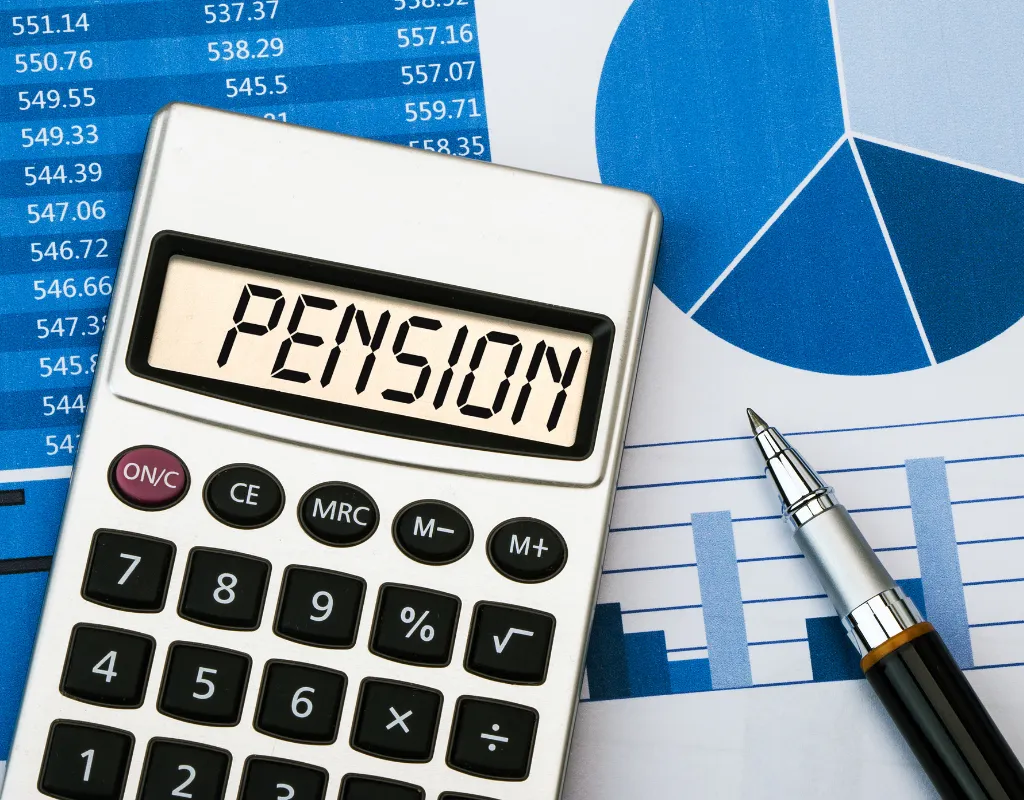
If you work in Japan as a foreign resident, you’ve probably asked yourself: how much pension will I get in Japan? Many foreign workers pay into the system from every paycheck without ever knowing the answer—or even whether they qualify to receive anything at all.
Your estimate comes down to three things: your employment type, how long you contribute, and your salary level. Contribute for 10 years or more, and you can receive a Japanese pension even if you live overseas. In this guide, Masamichi Takayanagi, a certified financial planner, will break it all down from scratch—estimates by employment type, ballpark figures by income level, and how to read your nenkin teikibin (pension statement).
The basics of the pension system itself, along with the detailed steps for claiming the lump-sum withdrawal payment, are covered in separate articles—so be sure to check those out as well.
About the Supervisor & Writer
Supervisor
Masamichi Takayanagi
Financial Planner & columnist;
An independent financial planner with extensive experience as a financial columnist, specializing in a wide range of topics including asset management, life insurance, inheritance, loan products, and credit cards. Over 1,000 articles and projects have been contributed to the field.
1st grade Certified Skilled Professional of Financial Planning, Certified Financial Planner®.
Table of Contents
Chapter 1: Why Your Pension Estimate Depends on Your Situation
Your pension estimate is shaped by three main factors:
- Employment type: Your baseline changes depending on whether you’re a company employee on kosei nenkin (employees’ pension) or a freelancer on kokumin nenkin (national pension).
- Contribution period: The longer you pay in, the more you receive—and as a rule, you need at least 10 years to qualify at all.
- Salary level: Under the employees’ pension, the higher your salary during your working years, the larger your payout.
Even among foreign residents, the estimate can differ by hundreds of thousands of yen depending on how you work and how long you stay. Knowing which of these factors work for or against you is the first step, and it makes planning for retirement far easier.

Chapter2: Kosei Nenkin vs Kokumin Nenkin: How Your Employment Type Changes the Estimate
There’s a big gap in your estimate between paying into the employees’ pension (kosei nenkin) as a company employee and paying only into the national pension (kokumin nenkin) as a freelancer. If you pay the full national pension for 40 years, the old-age basic pension from April 2026 comes to roughly ¥847,300 per year (¥70,608 per month).
Company employees on the employees’ pension get an earnings-related portion added on top of the basic pension, based on their salary. Here are the rough figures for 40 years of contributions:
- Annual income of ¥4 million: about ¥1.72 million per year (about ¥140,000 per month)
- Annual income of ¥6 million: about ¥2.15 million per year (about ¥180,000 per month)
- Annual income of ¥8 million: about ¥2.6 million per year (about ¥210,000 per month)
The growth flattens out around the ¥8 million mark because the standard monthly remuneration used in the calculation is capped at ¥650,000 a month. Put the full national pension of ¥840,000 next to the ¥2 million-plus you get with the employees’ pension on top, and the size of the gap between employment types becomes clear.
Source; Japan Pension Service — Old-Age Basic Pension: Eligibility, Start Age, and Amount

The quickest way to know your own estimate is to read your nenkin teikibin (pension statement) correctly—the notice mailed to you every year during your birth month. For those under 50, the postcard shows a pension amount based on your contributions so far; once you turn 50, it shows the estimated amount you’ll receive from age 65.
The number to check is the “estimated old-age pension” field, which combines the old-age basic pension and the old-age employees’ pension. You can confirm your number of contribution months in the “pension enrollment period to date” field—whether it has reached 120 months (10 years) tells you if you qualify.
Since the statement itself is written in Japanese, here are the key fields to look for:
| What to look for | Field on the statement (Japanese) |
|---|---|
|
Estimated old-age pension (total) |
老齢年金の見込額 |
|
Old-age basic pension |
老齢基礎年金 |
|
Old-age employees’ pension |
老齢厚生年金 |
|
Pension enrollment period to date |
これまでの年金加入期間 |
|
Contribution months |
加入月数 |
If you want a more detailed projection of your future estimate, the online “Nenkin Net” service lets you check figures based on your latest records. If the numbers on the postcard worry you, start with the contribution-months field and work down from there—it’s an easier way to take it all in.
Chapter 4: Scenario 1 — If You Stay in Japan Long-Term (10+ Years)
If you’ve contributed in Japan for 10 years or more, you meet the eligibility for an old-age pension and can receive it even while living overseas. Using a company employee earning ¥5 million a year as a model, here are the rough figures by number of years contributed:
- 10 years (120 months): about ¥480,000 per year (about ¥40,000 per month)
- 20 years (240 months): about ¥960,000 per year (about ¥80,000 per month)
- 30 years (360 months): about ¥1.45 million per year (about ¥120,000 per month)
- 40 years (480 months): about ¥1.93 million per year (about ¥160,000 per month)
If you hold permanent residency or plan to naturalize, check the paperwork whenever you change or leave a job, so you don’t leave gaps in your contribution record. Pensions are paid from age 65 as a rule, but if you choose deferred receipt and delay past age 66, your pension increases by 0.7% for each month you wait—42% if you wait until 70, and up to 84% if you wait until 75.
That said, deferral only pays off if you live past the break-even point of around age 82; otherwise you can come out behind in total. It’s a decision that depends on your health and how long you plan to keep working.
Chapter5: Scenario 2 — If You Leave Japan Before 10 Years
If you return home before reaching 10 years of contributions, you have two main options: claim the lump-sum withdrawal payment, or carry over your contribution period under a social security agreement.
The lump-sum withdrawal payment is available to foreign nationals who paid premiums for at least six months in Japan. The number of months used to calculate it is capped—as of 2025, at 60 months (five years). For the employees’ pension, contributing for five years at an average standard remuneration of ¥200,000 comes to roughly ¥1.1 million before tax, though 20.42% is withheld at source when it’s paid.
You may be able to get that withheld amount refunded if you appoint a tax representative before leaving and file for separate taxation on retirement income. On the other hand, if you’re from an agreement country covered for totalization—such as Germany or the United States—you also have the option of linking your Japanese contribution period toward a future pension.
Once you take the lump-sum withdrawal payment, you can no longer use that period for totalization, so it’s best to compare the two by amount before deciding. For the detailed steps when withdrawing with less than 10 years of contributions, see our Pension Refund article as well.
Chapter6: FAQ on How Much Pension Will I Get in Japan?
Q. Can I receive a Japanese pension even if I live overseas?
Yes—as long as you meet the 10-year eligibility requirement, you can receive it no matter where you live. You can have it paid into an overseas account or a Japanese one, and you’ll need to submit a proof-of-life report (genkyo todoke) each year.
Q. What happens if I’m a dependent spouse (Category 3 insured person)?
A spouse who is a dependent of a company employee becomes a Category 3 insured person, and that time counts toward your contribution period even without paying premiums yourself. At the full rate, that’s a basic pension of about ¥850,000 a year—so the time you spend as a dependent also builds up toward your future security.
Q. How do periods of exemption or deferral affect my estimate?
Periods when your premiums were exempted or deferred do count toward your eligibility period. However, they’re reflected in your estimate less than fully paid periods—a full exemption counts for one-half, for example—so if you can afford it, consider filling the gap through back-payment or voluntary enrollment.
Chapter7: Summary
For foreign residents, your pension estimate varies widely based on three factors: employment type, contribution period, and salary level. The employees’ pension that company workers pay into adds an earnings-related portion on top of the full national pension of about ¥850,000 a year—and depending on your income and years of contributions, it can reach well over ¥2 million a year.
Meet the eligibility requirement with 10 or more years of contributions, and you can receive your pension even while living abroad, with the option to increase it through deferred receipt. If you return home before 10 years, it’s essential to compare the lump-sum withdrawal payment against totalization under a social security agreement by amount before you decide.
Start by checking your contribution months and estimate on your nenkin teikibin, and put them to work in planning for your future. Once you can see where you stand in real numbers, that vague anxiety can turn into concrete preparation.
*This article is provided for general informational purposes only and does not constitute individual financial or legal advice. The figures shown here are estimates based on the sources cited and will vary depending on your income, pension contribution history, living situation, and exchange rate fluctuations. Information is accurate as of July 2026. Pension eligibility and tax treatment differ case by case, so please confirm with a certified financial planner, the relevant government agency, or a qualified professional before acting on any information in this article.