


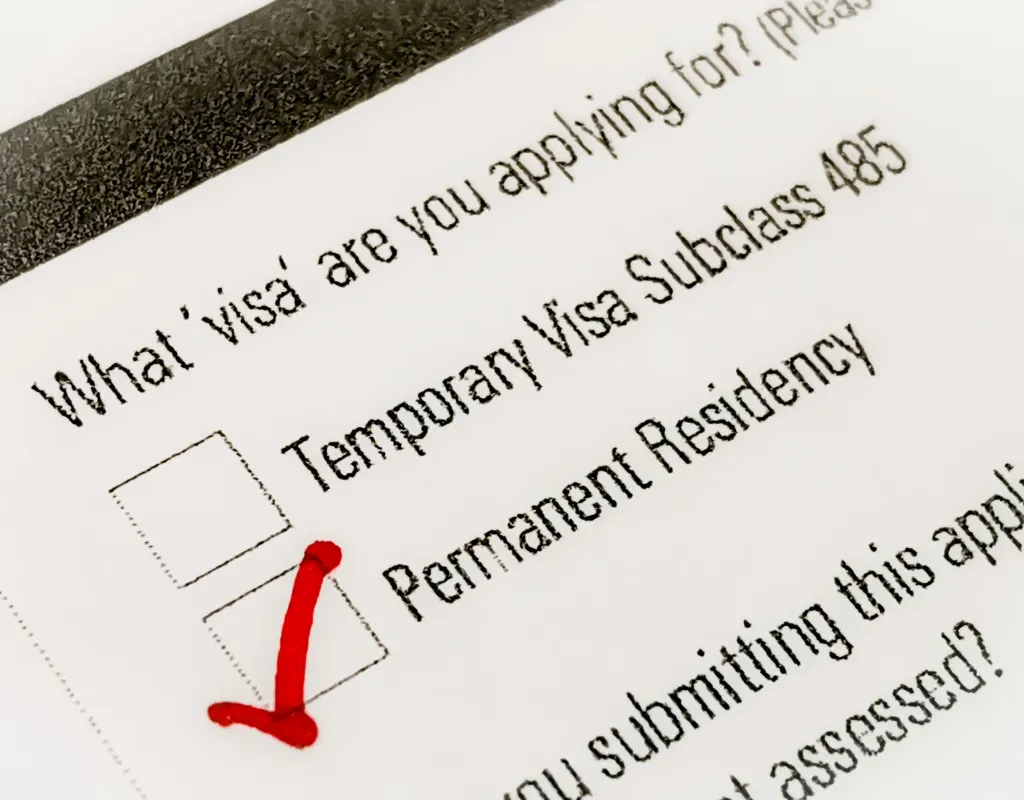
If you have been living in Japan for a number of years, you may have started thinking about applying for Permanent Residency (永住権). It is one of the most significant visa statuses available, with a direct impact on your financial stability and long-term plans in Japan.
All information is supervised by Administrative Scrivener Masae Kumano, representative of Tokyo International Management Administrative Procedures Legal Specialists Corporation, to ensure accuracy and reliability.
About the Supervisor
Supervisor
Masae Kumano
Graduated from the Faculty of Law at Waseda University and completed her Juris Doctor at Chuo University Law School. After working in the legal departments of an IT vendor and a major e-commerce company, she became a licensed Administrative Scrivener (Registration No. 19081036, Gyoseishoshi Lawyers of Tokyo).
A Certified Immigration Application Agent (No. 21-181) and a part-time lecturer at Hannan University. Handling around 150 immigration and status of residence cases each year, she supports many foreign residents with immigration procedures and life in Japan.
Table of Contents
Chapter 1: What Is Permanent Residency in Japan?
Permanent Residency in Japan is officially classified as a visa status known as “Permanent Resident” (在留資格:永住者). It is a special residence status granted to foreign nationals who have established a stable, long-term life in Japan.
The key features of Permanent Residency are as follows:
- No expiry on your period of stay — no renewal required
- No restrictions on employment or activities
- Freedom to choose where you live and what you do for work
With a standard work visa, you are typically limited to a specific occupation or employment type and must renew your status every few years. As a Permanent Resident, those restrictions no longer apply, allowing you to live in Japan in much the same way as a Japanese national.
One important point to note, however, is that obtaining Permanent Residency does not mean becoming a Japanese citizen. You retain your foreign nationality while gaining the right to reside in Japan indefinitely.

Chapter 2: Benefits of Permanent Residency in Japan
1. No Visa Renewal Required
Standard visas require renewal every one, three, or five years. As a Permanent Resident, you are no longer required to renew your visa status, freeing you from the time and effort involved in the renewal process — as well as the risk of a renewal being denied.
Please note that your Residence Card (在留カード) does need to be renewed once every seven years. However, this is a straightforward process with no document screening such as tax certificates or payment records required. In most cases, your new card is issued on the same day.
2. Freedom to Choose Your Career
Permanent Residency removes all restrictions on occupation and employment type, opening up significantly more career options, including:
- Changing jobs freely
- Taking on side work or working as a freelancer
- Starting your own business
3. Stronger Financial Credibility
Because Permanent Residents are considered long-term residents of Japan, you may find it easier to access financial products such as:
- Home loan (mortgage) approval
- Credit card applications
Please keep in mind that eligibility criteria vary between banks and financial institutions, so approval is not guaranteed.
Related Post
4. Benefits for Your Family
When the primary earner in a household obtains Permanent Residency, their spouse and children become eligible for the “Spouse or Child of Permanent Resident” (永住者の配偶者等) visa status. This status comes with no employment restrictions, and also allows family members to apply for Permanent Residency themselves in the future.
By contrast, family members of standard work visa holders are typically granted “Dependent” (家族滞在) status, which does carry restrictions on employment.

Permanent Residency is often compared to naturalization (帰化) — the process of obtaining Japanese citizenship. Understanding the difference between the two is essential when deciding which path is right for you.
With Permanent Residency, you maintain your original nationality while enjoying the freedom to live and work in Japan without restriction.
Naturalization, on the other hand, grants you the full rights of a Japanese citizen — including the right to vote — but requires you to renounce your original nationality.
The right choice depends entirely on your personal circumstances and priorities. If maintaining your home country’s nationality is important to you, Permanent Residency is likely the better option. If you value the full rights of Japanese citizenship and are willing to give up your original nationality, naturalization may be worth considering.
| Permanent Residency (永住権) | Naturalization (帰化) | |
|---|---|---|
|
Nationality |
Retain your foreign nationality |
Acquire Japanese nationality |
|
Residence status |
Permanent Resident (永住者) |
Japanese citizen |
|
Work restrictions |
None |
None |
|
Right to vote |
No |
Yes |
|
Re-entry to Japan |
Permitted (re-entry permit required) |
No restrictions |
|
Japanese passport |
No |
Yes |
Chapter 4: Basic Requirements for Permanent Residency in Japan
Permanent Residency is not granted automatically upon application — it is subject to a rigorous screening process. The Immigration Services Agency of Japan (出入国在留管理庁) sets out three core requirements that applicants must meet.
1. Good Conduct
You are expected to abide by Japanese laws and regulations and to lead a socially responsible life. This includes:
- No criminal record
- A minimal history of traffic violations
- No conduct that undermines your social credibility
Even minor violations can have a negative impact on your application if they accumulate over time.
2. Financial Self-Sufficiency
You must demonstrate that you have a stable income and are capable of supporting yourself and your family independently. Key factors include:
- A consistent and ongoing source of income
- Financial stability for yourself and any dependents
- No reliance on public assistance such as welfare
This requirement applies not only to company employees, but also to the self-employed and freelancers, provided they can demonstrate sufficient income stability. Please note that applicants holding status-based residence statuses such as “Dependent” (家族滞在) or “Long-Term Resident” (定住者) are required to provide proof of household income rather than individual income alone.
3. Deemed to Be in the Interest of Japan
This is the most critical requirement and is assessed based on a combination of the following factors:
- You have resided in Japan for 10 years or more in principle
- Of that period, you have been continuously engaged in activities under a qualifying work visa or similar status for 3 years or more → From April 1, 2027, this requirement will increase from 3 years to 5 years
- You have paid all taxes (income tax and residence tax) on time and without delay → Specifically, residence tax must have been paid in full and without any late payments for the past 5 years
- You have no outstanding pension or social insurance contributions → Pension and social insurance premiums must have been paid in full and without any late payments for the past 2 years
- You currently hold a stable residence status
In recent years, tax and pension payment history has come under increasingly strict scrutiny. Even a single month of late or missed payment may be grounds for rejection. Please ensure your payments are always made on time.
Chapter5: Frequently Asked Questions (FAQ)
Here are some of the most common questions clients ask about permanent residency in Japan.
Q1. What are the most common reasons for a Permanent Residency application to be rejected?
Answer:
Meeting the eligibility requirements does not guarantee approval — each application is assessed comprehensively. In practice, the most common reason for rejection is unpaid or late tax and pension contributions. Residence tax and National Pension payments in particular are scrutinised carefully, and even a single late payment — not just recent ones, but historical records as well — can negatively impact your application.
The stability of your residency status is also a key consideration. Frequent job changes within a short period, or gaps in employment, may lead assessors to conclude that your livelihood is not sufficiently stable.
In addition, an accumulation of traffic violations or repeated minor offences can be treated as evidence of poor conduct and may affect the outcome of your application.
Insufficient income — or income that falls short of what is needed to support your dependents — is another potential ground for rejection. Finally, do not overlook basic administrative errors: incomplete documentation, incorrect entries, or inconsistencies between documents can all work against you.
When preparing your Permanent Residency application, it is advisable to pay particular attention to three areas: tax payments, pension contributions, and continuity of residency status. These are the factors that tend to be scrutinised most rigorously.
Q2. Are the number of days spent outside Japan taken into account during the Permanent Residency application process?
Answer:
Yes, time spent outside Japan is one of the factors considered during the assessment. As Permanent Residency applications are evaluated based on whether Japan is your primary place of residence, extended periods abroad require careful attention.
In general, a single trip of considerable length, or a high total number of days spent overseas throughout the year, may lead assessors to conclude that your ties to Japan are insufficient. Stays abroad lasting several months in particular can have a notable impact on the outcome of your application.
As a general rule, foreign nationals are permitted to spend no more than one third of any given year outside Japan. Exceeding this threshold can make even a standard visa renewal difficult to obtain, unless you are able to demonstrate exceptional circumstances — such as a business requirement or a family member’s illness.
Short-term business trips or temporary visits to your home country are unlikely to cause significant issues on their own. However, if overseas travel is frequent or the proportion of time spent abroad is high, assessors may question where your actual centre of life is based.
Ultimately, what matters is whether you can demonstrate — through your resident registration, tax records, and employment history — that Japan is genuinely where you live.
Q3: How important is annual income in the Permanent Residency application process?
Answer:
Annual income is an important factor in the assessment, but it is not evaluated purely on the basis of the amount alone. What matters most is the continuity and stability of your income — in other words, whether you are able to sustain a stable life in Japan over the long term.
As a general benchmark, an annual income of around ¥3,000,000 is often cited as a rough guideline for single applicants, with higher income expected for those with dependants. While the Immigration Services Agency does not publish official income thresholds, it is generally understood that an additional ¥700,000 to ¥800,000 per dependant is expected. This translates to approximately ¥3,700,000 to ¥4,000,000 for those supporting a spouse, and ¥4,400,000 to ¥4,800,000 for those supporting a spouse and one child. Please note that these are unofficial estimates and may vary depending on your region, cost of living, and household composition.
For example, a temporarily high income may not be viewed favourably if you have recently changed jobs or if your earnings fluctuate significantly — as this may raise concerns about stability. Conversely, a modest but consistent income maintained over a number of years can work in your favour, as it demonstrates reliable financial stability.
Q4: How much does it cost to apply for Permanent Residency?
Answer:
The costs involved in a Permanent Residency application are relatively straightforward, but fall into several categories.
First, if your application is approved, a revenue stamp (収入印紙) of ¥10,000 is required as a processing fee. This fee is only payable upon approval and does not apply if your application is rejected.
Please note that there have been reports indicating that the fee for maintaining Permanent Residency status after approval may be raised in the near future — from the current level to somewhere between ¥200,000 and ¥300,000. We recommend staying informed of any official announcements regarding this change.
Second, you will need to budget for the cost of obtaining the required documents, such as your certificate of residence, tax assessment notice, and tax payment certificate. In most cases, this amounts to a few thousand yen up to around ¥10,000 in total, though this may vary depending on your individual circumstances.
Finally, if you choose to engage a professional such as an administrative scrivener (行政書士), additional fees will apply. Typical fees range from ¥50,000 to ¥150,000 depending on the scope of support provided. While it is possible to apply on your own, many applicants choose to work with a professional given the complexity of the documentation involved.
Q5. What happens if my visa expires while my Permanent Residency application is still being processed?
Submitting a Permanent Residency application does not extend the validity of your current residence status. Even while your application is under review, you must renew your existing visa as usual if your expiry date is approaching.
This is a point that many applicants misunderstand — a Permanent Residency application and a visa renewal are treated as entirely separate procedures. If your residence status expires without being renewed, you will be in violation of immigration law, which can have serious consequences for your Permanent Residency application.
On the other hand, successfully renewing your visa during the application period is generally viewed positively, as it demonstrates that your residency status remains stable — which can work in your favour during the assessment process.
It is also worth noting that Permanent Residency applications can take anywhere from six months to over a year to process, meaning you may need to renew your visa more than once in the interim. Careful attention to your visa expiry dates is strongly advised throughout this period.
Chapter6: Summary
Permanent Residency is a residence status granted to those who can demonstrate a combination of long-term residency, stable income, and a consistent record of tax and pension payments. In practice, the majority of rejected applications come down to a weakness in one or more of these areas — most commonly unpaid taxes or pension contributions, an unstable residency history, or excessive time spent outside Japan.
It is important to remember that visa renewals remain your responsibility throughout the application process. Keeping your tax payments, social insurance contributions, and residency status in good order — and planning well in advance — is essential.
One pattern that is frequently observed, particularly among those who have recently arrived in Japan, is a gap in awareness around health insurance and pension enrollment. While many newcomers are conscious of their tax obligations, they may not realise they are also required to enroll in the public health insurance and pension systems. Similarly, those who change jobs sometimes discover — often much later — that their health insurance or pension coverage lapsed for several months during the transition. If you are considering applying for Permanent Residency in the future, it is strongly recommended that you visit the relevant public offices — such as your local tax office, municipal office (区役所・市役所), or pension office — to confirm your current tax payment and social insurance enrollment status.
For those seeking a more reliable path to Permanent Residency, the Points-Based System is worth exploring. Applicants who hold a Highly Skilled Professional visa are granted a fixed five-year residence period. Those who score 80 points or more may be eligible to apply for Permanent Residency after just one year of residence, while those with 70 points or more may apply after three years. → Points-Based System — Immigration Services Agency of Japan
The Points-Based System can also be accessed through a change of status application, meaning that if your academic background, professional experience, and other past credentials already place you near the required threshold, it may be worth considering a targeted approach — such as increasing your income — to reach the points needed and pursue Permanent Residency through this route.
Ultimately, the most important step is to take an honest look at your current situation before deciding when and how to apply.
* This article is supervised by licensed administrative scrivener Masae Kumano, representative of Tokyo International Business Law Office. It is provided for general informational purposes only and does not constitute individual legal or immigration advice. Readers are encouraged to consult a qualified administrative scrivener or the Immigration Services Agency of Japan directly for guidance specific to their circumstances. Information is accurate as of May 5th, 2026 but may be subject to change.