As winter ends and spring arrives, hay fever in Japan begins with the spread of cedar and hinoki pollen. This affects many people with allergies across the country. Stay updated with the latest information for 2026 and take early steps to manage your symptoms this season. Also, please prepare the essential items and right medication to reduce your hay fever symptoms.
Table of Contents
Chapter 1: Start of Cedar Pollen Season
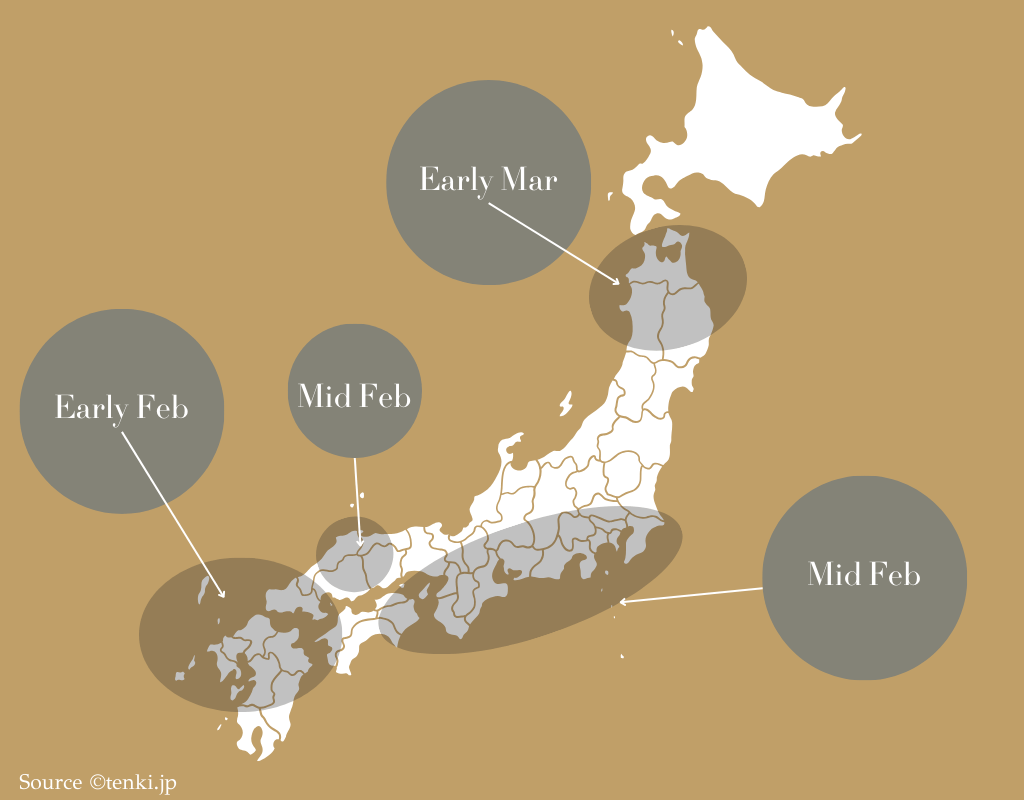
In 2026, hay fever in Japan will start in February. The pollen season will begin in Fukuoka, then move on to Tokyo, Osaka, and other major cities by mid-February. After that, cedar pollen will start spreading to the northern Tohoku region. Here’s a simple breakdown of when cedar pollen will start flying:
- Kyushu to parts of Kanto: Early February
- Tokyo, Nagoya, Osaka, Hiroshima, Takamatsu: Mid-February
- Northern Tohoku: Early March
The timing of cedar pollen season depends on how cold the early winter is. If temperatures drop sharply, cedar trees break dormancy and begin to bloom earlier when it gets warmer. With March expected to be warmer than usual, cedar trees should bloom smoothly. Most areas will experience a start similar to previous years, with Tokai and Tohoku regions starting slightly earlier than usual.

The peak of hay fever in Japan will see an intense amount of cedar pollen flying through the air. Here’s when the highest pollen levels are expected in different regions:
- Fukuoka, Takamatsu, and Tokyo: Late February
- Hiroshima, Osaka, Nagoya, Kanazawa, Sendai: Early to mid-March
In all these areas, the timing will be around the same as previous years. The peak period will last for about 10 days to a month, with pollen levels reaching their highest point during this time.
| Area | Start Date (Expected) | Peak Period (Expected) |
|---|---|---|
|
Sendai |
Early March |
Mid-Late March |
|
Tokyo |
Late February |
Late Feb – Late March |
|
Kanazawa |
Early March |
Mid March |
|
Nagoya |
Early March |
Early – Mid March |
|
Osaka |
Early March |
Early – Mid March |
|
Hiroshima |
Early March |
Early – Mid March |
|
Takamatsu |
Early March |
Early – Mid March |
|
Kyushu |
Late February |
Late February – Mid March |
Chapter 3: Peak of Hinoki Pollen Season
The peak of hinoki pollen in Japan will generally occur from late March to early April. With March expected to have higher-than-usual temperatures, the hinoki pollen peak is predicted to arrive earlier than usual. The peak period is expected to last from 5 days to two weeks. Here’s a summary of the hinoki pollen season:
- Peak: Late March to early April
- Duration: 5 days to 2 weeks
In Sendai, the amount of hinoki pollen will be low, and a clear peak is not expected to occur.
| Area | Start Date (Expected) | Peak Period (Expected) |
|---|---|---|
|
Sendai |
– |
– |
|
Tokyo |
Late March |
Late March – Early April |
|
Kanazawa |
Early April |
Early April |
|
Nagoya |
Early April |
Early April |
|
Osaka |
Early April |
Early April |
|
Hiroshima |
Late March |
Late – Early April |
|
Takamatsu |
Late March |
Late – Early April |
|
Kyushu |
Late March |
Late March – Early April |