


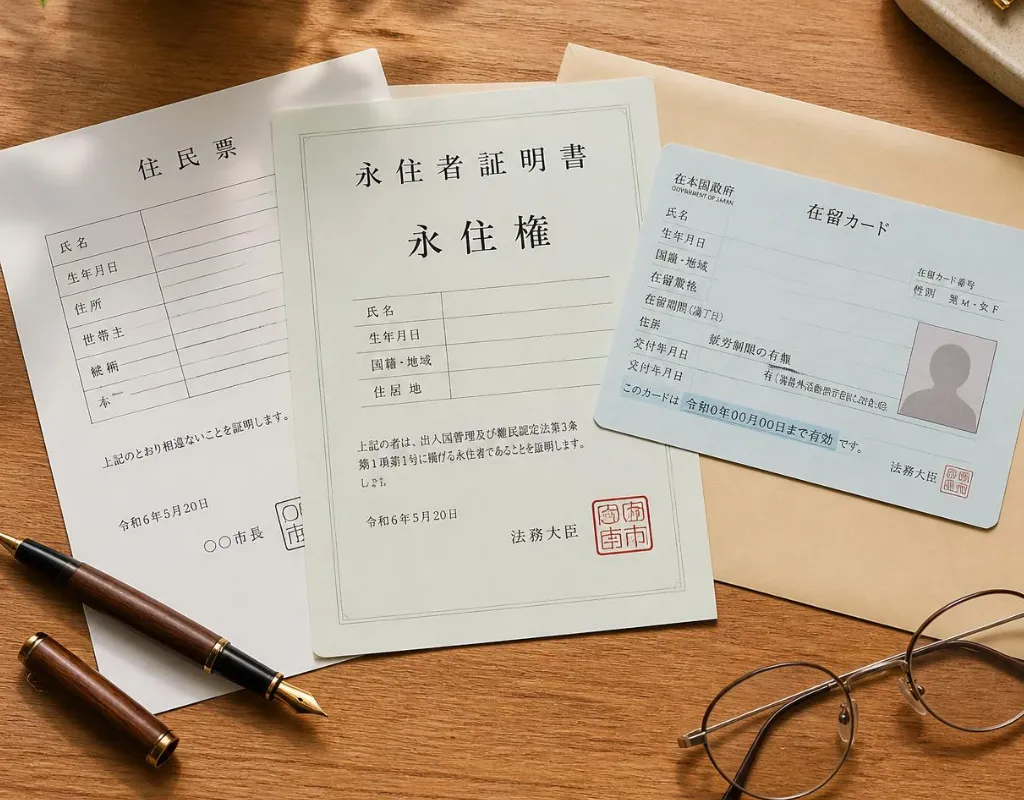
Japan permanent residency changes 2027 are arriving in stages—but not all of it is final. Some changes are already locked in. Others are still just proposals, working their way through public comment (the government’s public consultation process). If permanent residency is on your radar, what matters isn’t the dramatic headlines—it’s knowing where the line falls between what’s decided and what’s still up in the air.
That line is exactly what this guide draws. Supervised by administrative scrivener Masae Kumano, representative of Tokyo International Management Administrative Procedures Legal Specialists Corporation, it separates the confirmed changes from the proposals—based on official announcements from the Immigration Services Agency and the government’s public comment portal.
About the Supervisor
Supervisor
Masae Kumano
Graduated from the Faculty of Law at Waseda University and completed her Juris Doctor at Chuo University Law School. After working in the legal departments of an IT vendor and a major e-commerce company, she became a licensed Administrative Scrivener (Registration No. 19081036, Gyoseishoshi Lawyers of Tokyo).
A Certified Immigration Application Agent (No. 21-181) and a part-time lecturer at Hannan University. Handling around 150 immigration and status of residence cases each year, she supports many foreign residents with immigration procedures and life in Japan.
Table of Contents
Chapter 1: What's Confirmed and What's Still a Proposal
Here’s where each of the Japan permanent residency changes for 2027 actually stands right now. The “Status” column is the one to read first—it separates what’s already law from what’s still open for public comment.
| # | Change | Status | Timing |
|---|---|---|---|
|
Change 1 |
A 5-year period of stay required (the PR application requirement shifts from 3 years to 5 years) |
Confirmed |
Guideline revised February 24, 2026. Transitional measure runs until March 31, 2027; from April 1, 2027, a 5-year period of stay is required. |
|
Change 2 |
Requirement that income exceed the average for Japanese households |
Proposal — public comment open |
Comment period August 4 – September 3, 2026. The Immigration Services Agency aims to revise the guideline in October 2026. |
|
Change 3 |
Requirement for projected pension equal to 30 years of employees’ pension enrollment at the income level in Change 2 |
Proposal — public comment open |
Same as above |
|
Change 4 |
Extended spouse exception (marriage 3→5 years, residence 1→3 years) |
Proposal — public comment open |
Same as above |
|
Change 5 |
New “national interest” requirement (see breakdown below) |
Proposal — public comment open |
Same as above |
|
Change 6 |
New revocation guideline for unpaid taxes and pension |
Proposal |
Same as above |
Chapter 2: The Changes in Detail
Change 1 Stricter "Maximum Period of Stay" Rule (Confirmed)
To apply for permanent residency, you need to hold the “maximum period of stay” allowed under the Immigration Control Act. For most work visas, that legal maximum is 5 years.
In practice, though, immigration had long accepted a 3-year period of stay as if it met this “maximum period” requirement—so people on 3-year visas could still apply. The guideline revised on February 24, 2026 puts a clear end date on that practice.
Here’s how the cutoff works. If you hold a 3-year period of stay as of March 31, 2027, you’ll still be treated as meeting the “maximum period of stay”—but only for a first application, and only while that period of stay is still valid. From April 1, 2027, you’ll generally need to actually hold a 5-year period of stay on your residence card.
What this means for you:
- Already on a 5-year card? This change doesn’t affect you.
- On 3 years, but likely to apply by March 31, 2027? The transitional measure still covers you, just as before.
- Next renewal falls on or after that date, and you still only get 3 years? You may need to wait for a 5-year renewal before applying.
Change 2 Income Requirement (Proposal)
Under the draft revision published on August 4, 2026, earning an income above the average for Japanese households, on an ongoing basis, is set to be written in as a new requirement. The stated aim is to ensure applicants can support themselves in future without relying on public assistance. As of this writing (August 2026), the specific threshold and how it would be calculated haven’t been published. Some news reports point to the national average household income—about ¥5.75 million, per the 2025 Comprehensive Survey of Living Conditions—as a rough guide, but this is not an official standard.
Change 3 Pension Requirement (Proposal)
The same draft revision includes a requirement that your projected future pension reach the level you’d receive from 30 years of employees’ pension enrollment at the income level in “Change 2”. Some reports suggest that if your projected pension falls short, you could make up the gap with financial assets—but the details of how this would be assessed haven’t been published.
Change 4 Extended Spouse Exception (Proposal)
Under the current guideline, spouses of Japanese nationals, permanent residents, or special permanent residents can use an exception to the standard 10-year residence rule: their marriage must have been a genuine one lasting at least 3 years, and they must have lived in Japan continuously for at least 1 year. The draft revision proposes extending these to at least 5 years of marriage and at least 3 years of residence. This change would hit internationally married couples especially hard—particularly those who spent their married life abroad before moving to Japan.

Change 5 National Interests (Proposal)
This bundles several proposed criteria, so here’s the breakdown:
- National interest: applicants would need to show, in positive and concrete terms, that their permanent settlement benefits Japan.
- Not a public burden: even in categories that don’t require the independent-livelihood condition (spouses or children of Japanese nationals, permanent residents, or special permanent residents; refugees, and similar), a realistic risk of becoming a public burden would count against the application.
- Japanese ability: roughly CEFR B1 (an independent user) would be expected.
- Understanding of Japanese systems: weak understanding would count against the application.
- Children’s schooling: not enrolling school-age children during compulsory-education years would count against the application.
Change 6 New Guideline on Revoking Permanent Residence (Proposal)
Alongside the draft revision, reports say a new guideline on revoking permanent residence is set to be introduced from April 2027. It’s expected to spell out the specific cases and reasoning under which “deliberately failing to pay taxes or social insurance premiums” could become grounds for revocation. The details haven’t been published yet, and we’ll cover them in a separate article from October onward.


Two separate deadlines are closing in at the same time. The change1 transitional measure for the period-of-stay rule ends on March 31, 2027. Meanwhile, the other change 2-6 proposals on income, pension, and spouse requirements could be finalized as early as October 2026. If you already look likely to meet the current requirements, checking where you stand now—rather than waiting for the new guidelines to be finalized—keeps your options open.
Chapter4: Processing Can Take Several Months to Nearly a Year
One more thing that’s easy to overlook: how long the review itself takes. The Immigration Services Agency publishes average processing times by status of residence each month, as its “residence application processing period.” In the most recent data—for applications approved in April 2026—the average processing time for permanent residence applications was 317.9 days, or roughly 10.5 months. The figure shifts from month to month, and depending on the region and the case, taking more than a year isn’t unusual.
In other words, it’s not enough to simply “get your application in before the transitional deadline of March 31, 2027.” You need to work backwards from that date, allowing for both your document-preparation time and a review that can run from several months to nearly a year. Given that the new guidelines on income and pension requirements could be finalized around October 2026, the earlier you prepare, the better. You can check the latest figures each month on the Immigration Services Agency’s “residence application processing period” page—but here too, we recommend consulting an administrative scrivener as early as you can. Note that if you apply at the Tokyo Regional Immigration Bureau, you should expect well over a year from application to result.
Source: Immigration Services Agency, “Residence Application Processing Period”
Chapter5: What You Can Check Right Now
Even while you wait for the details of the new guidelines, there’s plenty you can sort out about your own situation. Three things matter most.
1. Check the period of stay on your residence card
Start by checking how many years your current residence card shows for your period of stay. Most work visas are granted for 1, 3, or 5 years, and which one you get varies from person to person, based on your past residence history and your employer’s situation. If you’ve already been granted 5 years, change 1 doesn’t affect you. If you’re on 3 years, the transitional deadline explained next comes into play.
2. Map your next renewal against the end of March 2027
The transitional measure isn’t a simple “file by March 31, 2027” deadline. In the wording of the guideline itself, it splits into two stages:
- Up to March 31, 2027: if you hold a 3-year period of stay, it’s treated as the “maximum period of stay” as before, and you can apply.
- If you hold a 3-year period of stay as of March 31, 2027: for applications made while that period of stay continues, just the first one will still be treated as meeting the “maximum period of stay,” even after the deadline has passed.
So the key thing isn’t “getting your application filed by the deadline”—it’s whether you hold a 3-year period of stay as of March 31, 2027. If you do, a one-time grace extends to your first application within that remaining period of stay. If, by that date, your period of stay has already switched over and is no longer 3 years, you fall outside this transitional measure. The practical point is to check whether your next renewal falls before or after March 31, 2027, and how many years you’re likely to hold at that moment.
3. Check your tax, pension, and health insurance payment record
The guideline lists proper payment of taxes, public pension, and public health insurance premiums as one of the requirements. “Proper” means no unpaid amounts—and that they were paid on time, without delay. Payment records cover the past 2 years for National Pension and National Health Insurance, and the past 5 years for resident tax and national tax certificates.
The thing to watch here: it isn’t a case of “I’ll just pay off what I owe in a lump sum before applying.” What’s examined is whether payments were made within their original due dates. In other words, it’s not a problem you can scramble to fix later. If your payments are deducted from your salary, this is less likely to be an issue—but if you’ve switched National Health Insurance and National Pension during a job change, or had periods of side work or freelancing, it’s worth checking your record for gaps early.
To confirm whether you paid National Health Insurance and National Pension on time: for National Health Insurance, your municipality can issue a payment certificate. Note, though, that this shows whether anything is unpaid—not the timing. If you pay your national insurance premiums at the counter, keep the receipts. And if you think there may have been delays in the past, it can be worth switching to direct debit and rebuilding a solid track record. For National Pension, you can also check by printing the monthly pension records screen on “Nenkin Net,” or by having a pension office issue an “insured person record inquiry response form” or similar.
Chapter6: Frequently Asked Questions (FAQ)
Can I still use the “3-year rule” for permanent residency?
Only within the transitional measure. If you hold a 3-year period of stay as of March 31, 2027, you can apply under the previous treatment—but only for a first application. After that, you’ll generally need a 5-year period of stay.
When do the new income and pension requirements start?
They’re still at the proposal stage. Public comment closed on September 3, 2026, and the Immigration Services Agency says it aims to revise the guideline around October 2026—but nothing is officially confirmed yet.
Is the spouse visa exception changing too?
As part of the same draft revision, an extension has been proposed—from 3 years of marriage and 1 year of residence, to 5 years of marriage and 3 years of residence. This, too, is not yet confirmed as of this writing.
Chapter7: Summary
The rules around permanent residency are a little complex right now, with confirmed changes and still-proposed ones moving forward at the same time. What’s certain is this: the period-of-stay requirement was already changed to 5 years on February 24, 2026, and you can apply on a 3-year period of stay only until March 31, 2027. The higher income, pension, and spouse requirements, on the other hand, are a draft revision published only on August 4, 2026—public comment closed on September 3, but the content is still at the stage where the Immigration Services Agency is aiming to finalize it around October, and it could yet change.
Something else that’s easy to overlook is how long the review itself takes. In the Immigration Services Agency’s data for applications approved in April 2026, the average processing time for permanent residence applications reached 317.9 days—roughly 10.5 months. Working backwards from the transitional deadline and the timing of the new guidelines, the earlier you prepare your documents, the more options you keep open.
That said, exactly how you’ll be treated—and what you should do by when—depends on your individual circumstances, such as your residence history, income, and payment record. This article is a general overview only; for a final judgment based on your own situation, confirming with an administrative scrivener is the surest way forward.
* This article is supervised by licensed administrative scrivener Masae Kumano, representative of Tokyo International Management Administrative Procedures Legal Specialists Corporation. It is provided for general informational purposes only and does not constitute individual legal or immigration advice. Readers are encouraged to consult a qualified administrative scrivener or the Immigration Services Agency of Japan directly for guidance specific to their circumstances. Information is accurate as of August 2026 but may be subject to change.