


- March 31, 2026
- BELONGING JAPAN
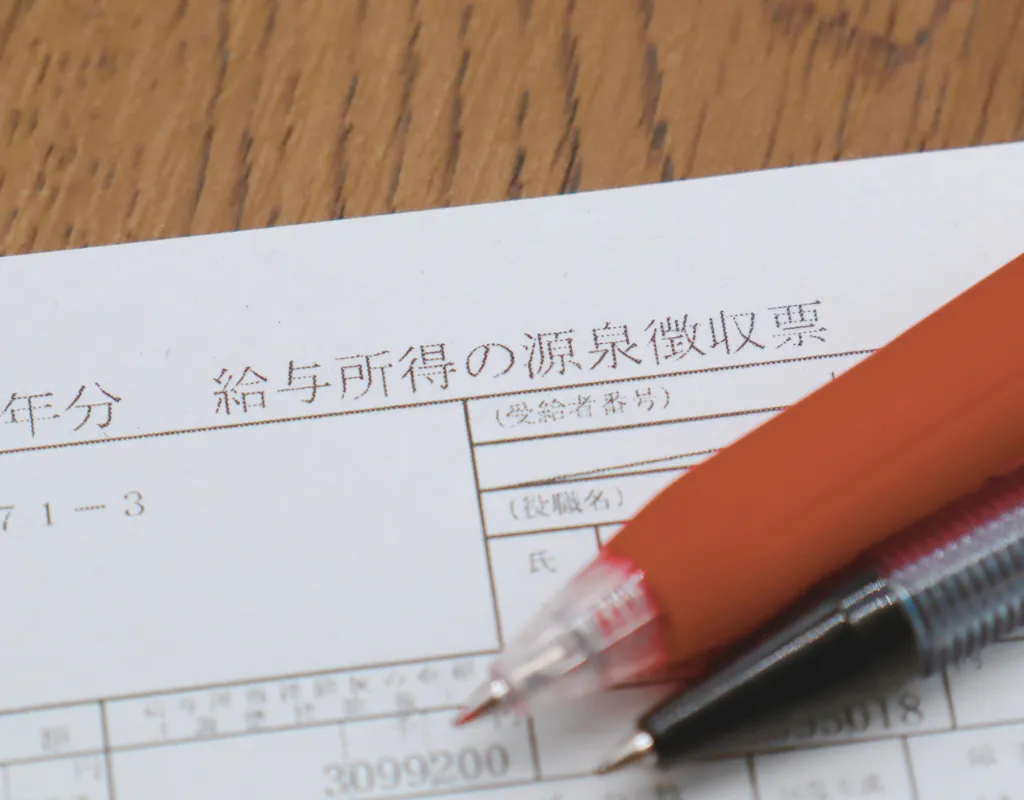
When working in Japan, foreign residents receive a document called Gensen Choshu Hyo at the end of the year or when leaving a job. However, many foreigners feel unsure because they do not know what the document shows, when it is issued, or how it is used.
Gensen Choshu Hyo is an official Japanese withholding tax certificate that summarizes your total annual income and the income tax already withheld by your employer. It is a critical document required for important procedures such as filing a tax return (kakutei shinkoku), changing jobs, and renewing or changing your visa status in Japan.
In this article, certified Financial Planner Masako Otake explains Gensen Choshu Hyo in a clear and practical way, covering everything from the basic meaning to key points on how to read it, so that even those without prior tax knowledge can understand it with confidence.
Table of Contents
About the Supervisor & Writer
Certified Financial Planner® / 1st Grade Certified Skilled Professional of Financial Planning / Certified Inheritance Consultant
Founder of Yume Planning (est. 2015)
After gaining experience working at various financial institutions, including securities firms, banks, and insurance companies, Masako became an independent financial planner in 2015. She provides consultations, writing, and lectures based on the belief that understanding your finances is key to living a richer, more authentic life.
Chapter 1: What Is Gensen Choshu Hyo?
Gensen Choshu Hyo is an official Japanese document that summarizes the total salary paid by your employer during one year, as well as the total amount of income tax and social insurance premiums already withheld.
In Japan, anyone working for a company—both Japanese nationals and foreign residents—generally receives a Gensen Choshu Hyo if they are an employee. This includes full-time employees, contract workers, and part-time staff.
In most cases, the document is issued by the employer between December and January of the following year.
1-1: What Is Gensen Choshu Hyo Used For?
Gensen Choshu Hyo is required in many important situations in Japan, including:
Filing a Japanese income tax return (kakutei shinkoku)
Informing a new employer of your previous income when changing jobs
Applying for or renewing a visa (status of residence) in Japan
Renting a home or applying for a housing loan or mortgage
Submitting proof of income for childcare facilities, schools, or other official procedures
1-2: Who Receives Gensen Choshu Hyo and When?
Anyone working for a Japanese company, including:
Full-time employees
Contract employees
Part-time or temporary workers
Even if you leave a job partway through the year, you must receive a Gensen Choshu Hyo after resignation
Important:
Japanese employers are legally required to issue a Gensen Choshu Hyo to their employees.

A Gensen Choshu Hyo contains many technical terms, which can feel overwhelming at first—especially for foreigners living in Japan. However, by understanding just four key amounts, it becomes much easier to grasp the overall picture of your income and taxes.
In this chapter, each amount is explained in simple terms, with clear points on what to check and why it matters, even if you have no prior knowledge of Japanese tax systems.
These explanations are based on guidance provided by the National Tax Agency of Japan, the official authority responsible for income tax administration.
Source: National Tax Agency

①: Total Amount Paid
支払金額|Shiharai Kingaku
Total Amount Paid refers to the total gross salary actually paid by your employer between January 1 and December 31 of the year.
This figure is commonly used as official proof of income, especially when changing jobs, as new employers often request it to confirm your previous earnings.
What Is Included in the Total Amount Paid?
The following income items are included in the Total Amount Paid shown on your Gensen Choshu Hyo:
Monthly salary
Overtime pay and various allowances
Bonuses (seasonal or performance-based)
What Is NOT Included?
Some payments are not included in this amount, such as:
The non-taxable portion of commuting allowances
Reimbursement of actual travel expenses for business trips
②: Amount After Employment Income Deduction
給与所得控除後の金額|Kyūyo Shotoku Kōjo-go no Kingaku
The Amount After Employment Income Deduction is the figure calculated by subtracting the employment income deduction from the Total Amount Paid.
This amount is considered your employment income (kyūyo shotoku) and serves as the base amount used to calculate income tax in Japan.
What Is the Employment Income Deduction?
The employment income deduction is a deduction officially recognized by the Japanese government. It is based on the idea that employees naturally incur work-related expenses, such as business attire, commuting costs, and other job-related costs.
Important points to know:
You do not need to submit receipts
The deduction is automatically applied
The deduction amount is determined by your annual income level
The specific deduction amount is set according to income brackets, as defined by the National Tax Agency of Japan.
③: Total Amount of Income Deductions
所得控除の額の合計額|Shotoku Kōjo no Gaku no Gōkeigaku
The Total Amount of Income Deductions is the combined total of additional deductions you are eligible to claim based on your personal circumstances.
The larger this deduction amount, the lower your final income tax liability will be. However, if you fail to declare eligible deductions, you may end up paying more tax than necessary. Careful preparation is especially important.
Common Examples of Income Deductions
Social insurance premium deduction
(national pension, health insurance, long-term care insurance, etc.)Dependent deduction
Spousal deduction
Life insurance premium deduction
Earthquake insurance premium deduction
④: Amount of Income Tax Withheld
源泉徴収税額|Gensen Chōshū Zeigaku
The Amount of Income Tax Withheld is the total amount of income tax that has already been deducted from your salary and bonuses over the course of one year.
In Japan, an estimated amount of income tax is automatically withheld each time your salary or bonus is paid. Your employer then pays this tax to the national government on your behalf, following the rules set by the National Tax Agency of Japan.
At the end of the year, your employer performs a year-end tax adjustment (nenmatsu chōsei). During this process, your annual income and eligible deductions are reviewed, and your income tax is recalculated. The final, confirmed amount of income tax is then recorded on your Gensen Choshu Hyo as the Amount of Income Tax Withheld.
Tax Refunds or Additional Tax Payments
If you file a tax return (kakutei shinkoku)—for example, after purchasing a home or claiming deductions not reflected in the year-end adjustment—you may be eligible for a tax refund if you paid too much tax.
If you have side income or receive salary from multiple employers, you may need to pay additional tax after filing your tax return.
Chapter 3: Frequently Asked Questions about Gensen Choshu Hyo
These are the questions most commonly received from foreign residents about 源泉徴収票 (Gensen Choshu Hyo).
Read the full FAQ from the button below—follow on Substack and join the community.
Q1. When do I receive my Gensen Choshu Hyo?
Q2. Do part-time or temporary workers receive a Gensen Choshu Hyo
Q3. What happens to my Gensen Choshu Hyo if I change jobs?
Q4. Do I need a Gensen Choshu Hyo if I plan to leave Japan?
Q5. How is Gensen Choshu Hyo used if I have side income?
Q6. What should I do if I lose my Gensen Choshu Hyo?
Q7. If I have a Gensen Choshu Hyo, do I always need to file a tax return?
Q8. How long should I keep my Gensen Choshu Hyo?
Chapter 4: Summary
Gensen Choshu Hyo is not just a document you receive at the end of the year. It is an official and accurate record of your annual income and tax situation in Japan.
For foreign residents, this document is especially important, as it is frequently required for procedures such as filing a tax return, changing jobs, and renewing or changing visa status. Understanding its contents helps reduce uncertainty and gives you confidence when dealing with Japanese administrative processes.
The key is to first understand the flow of the four core figures:
Total Amount Paid
Amount After Employment Income Deduction
Total Amount of Income Deductions
Amount of Income Tax Withheld
You do not need to understand every detail perfectly. Simply knowing what each number represents can significantly reduce anxiety about taxes.
If anything is unclear, or if your situation is complex, do not try to handle it alone. Consider consulting your employer’s HR or payroll department, the tax office, or a qualified professional.
By correctly understanding and effectively using your Gensen Choshu Hyo, you can make life in Japan more secure, smoother, and stress-free.
This article is provided for general informational purposes only and does not constitute personal financial, tax, or legal advice. While the content is supervised by a certified financial planner, it may not reflect your individual situation.
Readers are strongly encouraged to consult the National Tax Agency (NTA), local government offices, financial institutions, or licensed tax professionals for advice tailored to their specific circumstances.
Belonging JAPAN is not affiliated with, endorsed by, or acting on behalf of any government agency, tax authority, or financial institution referenced in this article.
Tax laws, deductions, procedures, and requirements are accurate as of December 2025 but are subject to change. Always verify the latest information through official sources before making any tax-related decisions or submitting filings.