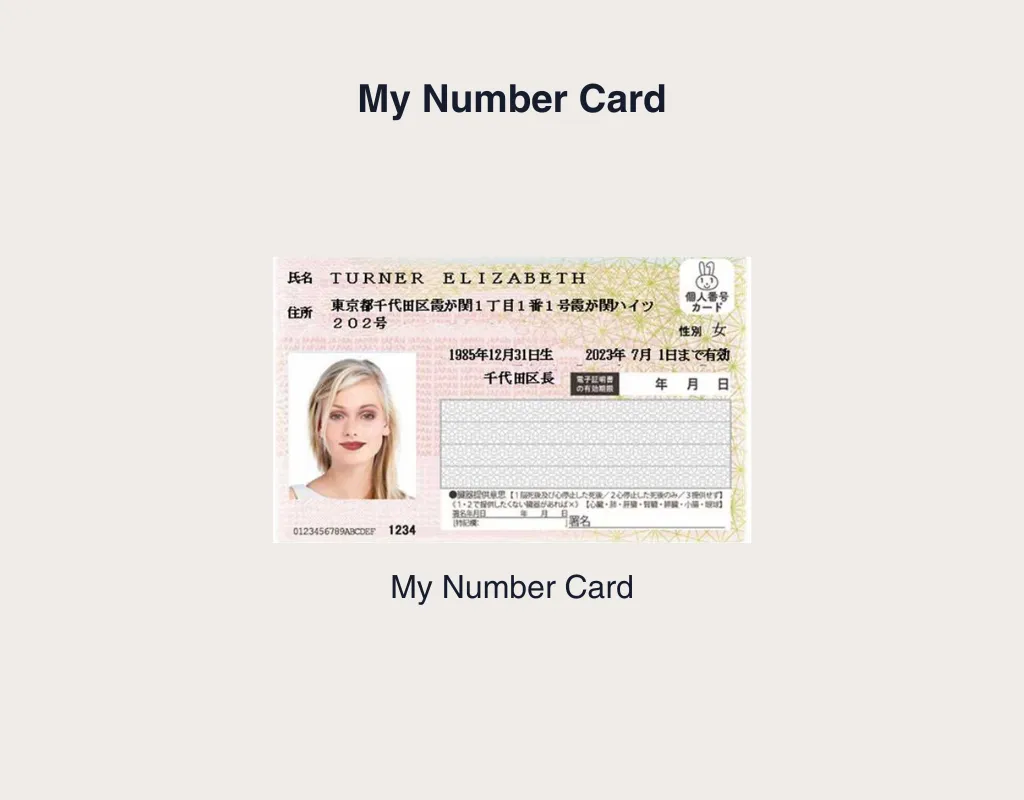
The My Number Card, which contains your personal 12-digit My Number, is more than just an identification document in Japan. Once registered through the Myna Portal, it can also function as a health insurance card, known as a Myna Hokensho. With a registered card, you can receive medical services at hospitals or pharmacies even if you do not have a traditional health insurance card.
Foreign residents with a residence registration (juminhyo) can apply for a My Number Card and use it as a Myna Hokensho. Understanding this system makes medical visits in Japan smoother, especially for those living in Japan long-term.
This guide, written by Certified Financial Planner Lili Katoh, explains how to use a Myna Hokensho, its benefits and drawbacks, and its relationship with private medical insurance.
About the Supervisor & Writer
Certified Financial Planner®
Founder of Money Step Office Inc.
Lili Katoh specializes in insurance, life planning, and asset management. She is a Health Management Expert Advisor and author of “Setai Nenshū 1000 Man En” and “Gattsuri Tamaru Chokin Recipe”. Born in California, USA, she brings international insight to Japanese financial planning.
Who This Article Is For
This guide is intended for foreign residents in Japan who:
Foreign residents in Japan enrolled in public health insurance.
Long-term residents planning to stay in Japan.
Those who face language barriers when visiting hospitals or pharmacies.
Table of Contents
Chapter 1: What is a Myna Hokensho?
A Myna Hokensho (My Number health insurance card) integrates your health insurance information into your My Number Card. By presenting it to a hospital or pharmacy via a dedicated card reader, your identity is verified, and medical expenses may be calculated automatically, potentially reducing your payment burden.
The My Number Card is issued to anyone with a residence registration (juminhyo) in Japan, including foreign residents who apply. If you are enrolled in Japan’s public health insurance (National Health Insurance or Employees’ Health Insurance), you can use the My Number Card as a Myna Hokensho.
The system began in October 2021 and is now widely available across hospitals and pharmacies in Japan.
This image was created based on reference information provided by the Immigration Services Agency of Japan (PDF: https://www.moj.go.jp/isa/content/001420065.pdf)
1.1. Why the Myna Hokensho was Introduced
The introduction of the Myna Hokensho supports the digitalization of healthcare. With Japan facing an aging population, rising patient numbers, and labor shortages in medical facilities, digitized health information helps improve efficiency.
Before the Myna Hokensho, individuals received traditional health insurance cards, which varied in format (paper or plastic). As of December 2, 2025, new issuance of these traditional cards has stopped, and the Myna Hokensho is now the standard.
Reference: Digital Agency – My Number Card Health Insurance Usage
Chapter 2: Who Can Use the Myna Hokensho?
Any resident enrolled in Japan’s public health insurance can use a Myna Hokensho. Foreign residents staying in Japan for more than three months and registered in the municipal residence registry are generally eligible to enroll in public health insurance and use the card.
The Ministry of Health, Labour and Welfare provides guidance for foreign residents in English, Chinese, Spanish, and 15 other languages.
Reference: MHLW – My Number Health Insurance Card Guide for Foreign Residents
Chapter 3: Benefits of Using the Myna Hokensho
Using the Myna Hokensho (My Number Card as health insurance card) offers several advantages, such as smoother hospital visits and easier handling of high medical expenses.
1. Accurate Sharing of Medical History
When you use a Myna Hokensho, your medical records—including treatment history, prescribed medications, and results of specific health checkups—can be linked to a centralized database. With your consent, doctors and pharmacists can access this information, making consultations and prescriptions faster and more accurate.
This is particularly useful when visiting a hospital for the first time and explaining past illnesses, injuries, or chronic conditions is difficult. It also helps when you cannot recall the names of previously prescribed medications or struggle to explain them in Japanese.
Moreover, if you have prescriptions from other hospitals, healthcare providers can avoid prescribing conflicting medications or duplicate prescriptions, ensuring safer treatment.
From October 2025, Myna Hokensho usage has expanded to emergency services. When calling 119 for an ambulance, emergency personnel, with your consent, can access your past medical records and prescription history to provide better emergency care and choose the most suitable hospital for transport. This helps ensure prompt and accurate treatment, even if you are unable to communicate your medical history effectively.
2. Simplified Procedures for High Medical Expenses
Japan’s public health insurance system limits patient co-payments to 10–30%, depending on age and income. If monthly costs exceed a predefined limit, the High-Cost Medical Expense system reimburses the excess. Normally, to receive this reimbursement, patients must apply after paying medical bills or complete prior procedures.
Using the Myna Hokensho, the system automatically stops billing once the monthly limit is reached, eliminating the need for pre-registration or reimbursement requests at the hospital.
Additionally, when annual medical expenses become high, you can claim a medical expense deduction during income tax filing. Typically, this requires manually calculating medical expenses from receipts and filling out detailed forms. However, with a Myna Hokensho, you can view and summarize your medical costs via the Myna Portal, and the system can link with e-Tax for easier electronic filing. Even if you do not file taxes, the Myna Portal allows you to check your treatment history and medications at any time.
Related Post

3. Smartphone Accessibility
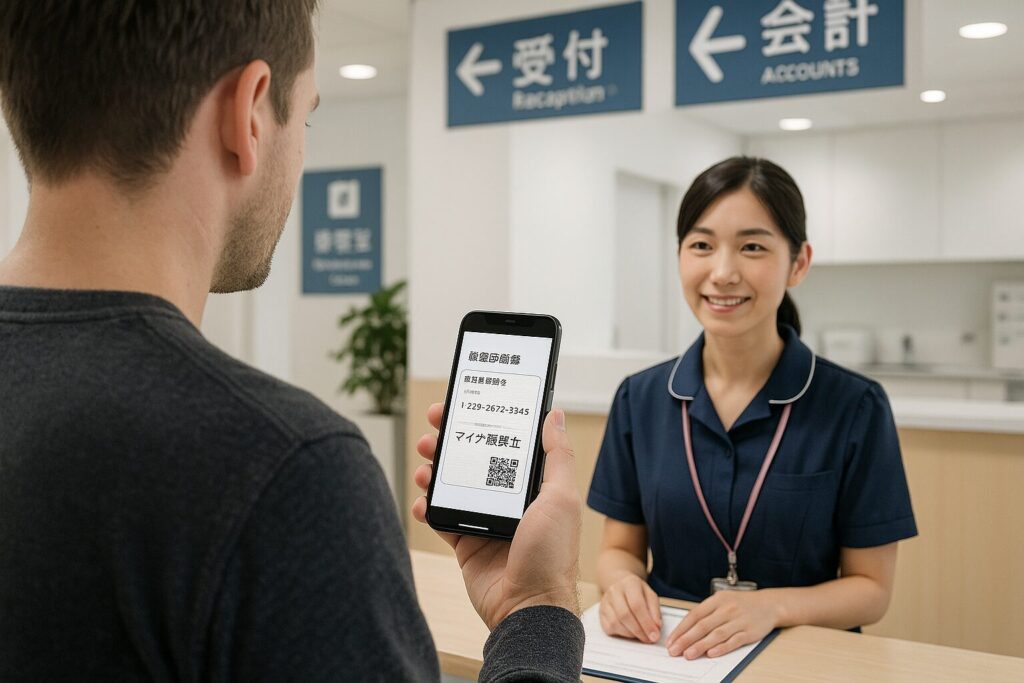
From September 19, 2025, Myna Hokensho can also be used on smartphones (Android and iPhone). If your My Number Card is registered as a health insurance card, you can add the Myna Hokensho function to your phone. With this, you can complete hospital and pharmacy procedures by simply tapping your smartphone on a card reader, without carrying the physical card.
Physical cards remain usable, and smartphone registration requires installing the Myna Portal App and registering your My Number Card on the device.
Reference:

While convenient, the Myna Hokensho has some limitations.
1. System Failures or Power Outages
Hospitals and pharmacies process Myna Hokensho via dedicated card readers. If a system failure, power outage, or equipment malfunction occurs, the card may not work. In such cases, presenting the My Number Card itself allows verification via photo and past records, or you can complete a Health Insurance Eligibility Statement to ensure coverage. Full patient payment (10/10) is generally not required, but processing may take longer than usual.
2. Not All Medical Institutions Support Smartphone Usage
Although the smartphone version of the My Number health insurance card began operation on September 19, 2025, it can only be used at hospitals, clinics, and pharmacies equipped with compatible systems. As of October 2025, not all medical institutions nationwide are ready to accept it. In such cases, you will need to present your My Number card instead.
You can also search for medical institutions that support the smartphone My Number health insurance card on the Ministry of Health, Labour and Welfare’s website: Ministry of Health, Labour and Welfare
3. No Link with Private Insurance
The Myna Hokensho only applies to treatments covered by Japan’s public health insurance. Treatments not covered by public insurance (such as private or elective procedures) require full payment.
If you have private medical insurance, reimbursement for treatments outside public insurance must be claimed separately according to your insurer’s procedures. Therefore, keep your private insurance membership card or policy documents separate from the Myna Hokensho.
Chapter 5: How to Register and Use the Myna Hokensho
To use the Myna Hokensho (My Number Card as health insurance card), you must first complete the one-time registration. Here’s a step-by-step guide.
Step 1: Registration
Registration is required to use the Myna Hokensho. You can register using one of the following three methods:
At a hospital or pharmacy using a face-recognition card reader
Place your My Number Card on the card reader at a hospital or pharmacy, and follow the on-screen instructions to complete registration.Via the Myna Portal
You can register online through the Myna Portal. Registration requires a smartphone and the Myna Portal App.
Myna Portal RegistrationAt a Seven Bank ATM
Registration is also available at Seven Bank ATMs found in convenience stores nationwide. Select the “Apply for My Number Card Health Insurance Use” button on the ATM screen and follow the instructions.
Seven Bank ATM Registration
Step 2: Using the Myna Hokensho for Medical Visits
Once registration is complete, you can use the Myna Hokensho at hospitals, clinics, and pharmacies. Simply tap your My Number Card or registered smartphone on the card reader and verify your identity using face recognition or your PIN.
Chapter6: Common Misunderstandings About the Myna Hokensho
Here are some common misconceptions about using the Myna Hokensho (My Number Card as a health insurance card).
× “The old health insurance card can no longer be used.”
Although the issuance of new traditional health insurance cards stopped on December 2, 2024, it does not mean that existing cards immediately become invalid. For employees and other cardholders, current health insurance cards remain valid until their expiration date, up to December 1, 2025.
Even if you accidentally use an expired card, it can still be temporarily accepted until the end of March 2026.
× “You cannot receive medical care without a Myna Hokensho.”
Using the Myna Hokensho is optional. If you do not have a My Number Card or have not registered for the Myna Hokensho, you will be issued a Health Insurance Eligibility Certificate. Presenting this certificate allows you to receive medical care as usual.
× “The Myna Hokensho automatically links to private health insurance for claims.”
The Myna Hokensho can only be used for treatments and prescriptions covered by Japan’s public health insurance. It does not automatically share information with private insurance companies. If you have private medical insurance and wish to receive reimbursement for treatments, you must submit a claim directly according to your insurance company’s procedures.
Chapter 7: Advice from a Financial Planner
The My Number Health Insurance Card is a convenient tool for smooth medical visits and pharmacy prescriptions. It can be especially helpful for foreign residents in Japan who may feel uneasy about explaining their symptoms or medical history in Japanese. With the upcoming wider adoption of smartphone-based use, the My Number Card can be utilized easily without needing to carry the physical card.
Chapter 8: Frequently Asked Questions (FAQ)
The following are common questions the author, as a financial planner, often receives from clients regarding the My Number Health Insurance Card.
Q1. How long can the old paper or card health insurance certificates be used?
A. They can be used until their original expiration date, and at the latest, until December 1, 2025. Even if the expiration date passes, they can be used provisionally until the end of March 2026.
Q2. What is a Health Insurance Eligibility Certificate?
A. This is a document issued to people who do not have a My Number Card or have not registered their card as a My Number Health Insurance Card. It serves as a substitute for a health insurance card and is issued automatically and free of charge to eligible individuals.
Q3. Is it mandatory to create a My Number Health Insurance Card?
A. While every person with a registered residence in Japan is assigned a My Number, obtaining a My Number Card is optional. It is not mandatory, so it is possible to live in Japan without a card. Similarly, registering the card as a My Number Health Insurance Card is also voluntary.
Q4. What should I do when leaving Japan or moving abroad?
A. When losing eligibility for public health insurance due to leaving Japan, returning home, or resigning from a job, the My Number Health Insurance Card will automatically lose its validity.
If you temporarily leave Japan and later return to re-establish your residence, your My Number will remain the same, and you can continue using your My Number Card. Generally, no special procedures are required when moving abroad. However, keep the card safe, as it will be needed if you reapply for a My Number Card upon your return. At that time, you can also reactivate the Health Insurance Card function.
If the card has expired or you do not plan to return to Japan, it should be returned to your municipal office.
Chapter9: Summary
The Myna Hokensho (My Number Health Insurance Card) is a useful tool for receiving treatments and prescriptions covered by Japan’s public health insurance. It allows patients to share their medical history and past prescriptions with doctors and pharmacists, which is especially helpful if communicating in Japanese is difficult. Additionally, it simplifies refund procedures when medical expenses become high. While its use is optional, it is particularly beneficial for those planning a long-term stay in Japan.
* This article is provided for general informational purposes only and does not constitute individual medical, health insurance, or legal advice. While reviewed by a certified financial planner and Health Management Expert Advisor, readers are encouraged to consult official government sources or their healthcare providers for guidance. Belonging JAPAN is not affiliated with or endorsed by any government agency or medical institution mentioned. Information such as procedures, regulations, and services is accurate as of October 2025 but may change; please verify details with official sources.