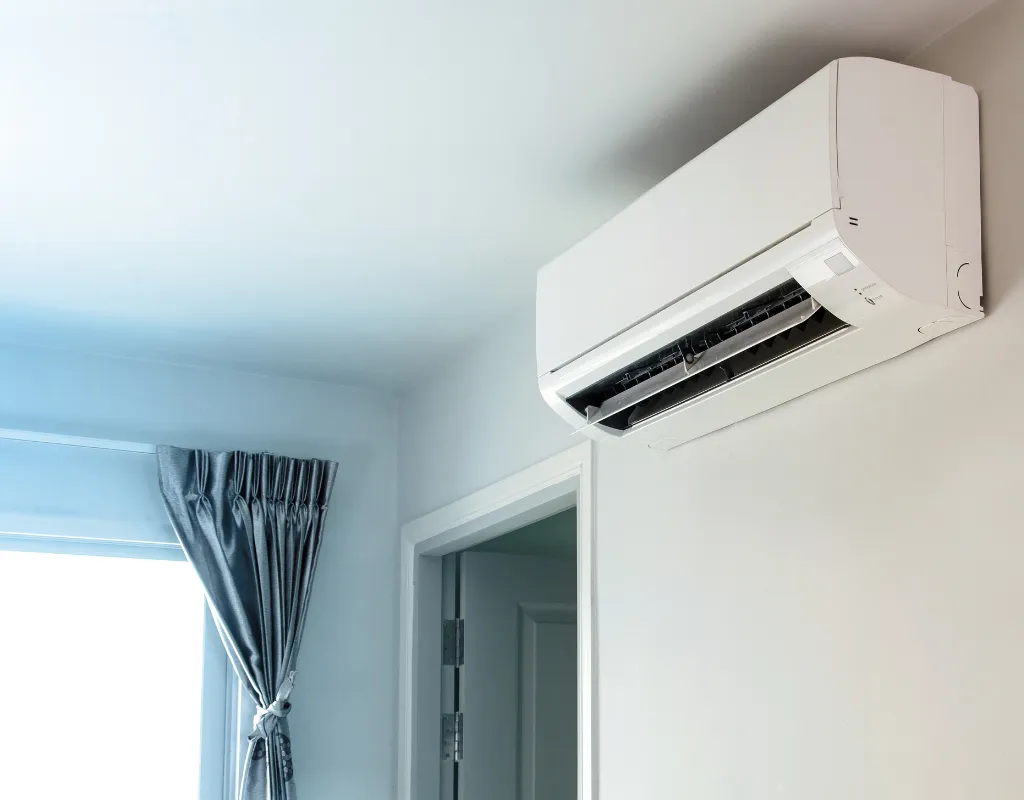
Summer in Japan is brutally hot, and the air conditioner cost in Japan is something many residents underestimate until the first bill arrives. Getting through the season without air conditioning simply isn’t realistic. Did your first electricity bill leave you shocked at how high it was?
There’s a reason those bills run high. As a renter, you rarely get to choose your air conditioner, the age of your building, or the terms of your contract. Without knowing how much these things affect your bill, it’s easy to keep using your unit in a way that costs far more than it should. Many foreign residents in Japan face this exact problem.
In this article, Masamichi Takayanagi, a certified financial planner, walks you through the settings and habits that lower your bill, how much cleaning your unit actually saves, and the installation and move-out pitfalls that can cost foreign residents dearly — all with an eye on your household budget.
Start with one small change today.
About the Supervisor & Writer
Supervisor
Masamichi Takayanagi
Financial Planner & columnist;
An independent financial planner with extensive experience as a financial columnist, specializing in a wide range of topics including asset management, life insurance, inheritance, loan products, and credit cards. Over 1,000 articles and projects have been contributed to the field.
1st grade Certified Skilled Professional of Financial Planning, Certified Financial Planner®.
Table of Contents
Chapter 1: How Much Does Running an AC Cost in Japan?
Let’s start with the bottom line: cooling your home typically costs somewhere between ¥1,400 and ¥5,100 per month. That said, the figure moves a great deal depending on how you use it.
Run your unit around the clock, for example, and one estimate puts the monthly cost at roughly ¥11,339 for a 6-jo room and about ¥23,704 for a 12-jo room. Broken down by the hour, expect around ¥15 for a 6-jo unit and about ¥45 for a 14-jo unit.
Electricity in Japan is generally calculated at a benchmark rate of ¥31 per kWh. That high unit price, combined with long running hours, is what sits behind a bill that feels steep. Start by working out a ballpark figure based on your room size and how many hours you actually run the unit.
Why Your Electricity Bill Depends on Your Apartment and AC Model
The biggest reason two people can use their AC the same way and pay different amounts comes down to insulation and the gap between indoor and outdoor temperatures. An air conditioner draws more power the wider the gap between the room temperature and your target setting, so in an older apartment with drafty gaps, cool air escapes and the unit burns extra electricity keeping up.
A newer, well-sealed mansion holds that cool air far better, which tends to bring the monthly total down even at identical settings. The unit itself matters just as much: a model from a decade ago and a current energy-efficient one consume noticeably different amounts of power.
To find out what your specific unit is capable of, look up the model number printed on the body or in the manual, then check its annual power consumption figure in the Energy Saving Performance Catalogue (省エネ性能カタログ). That gives you a far more realistic cost estimate than any general average. Start by opening the front panel of the indoor unit and finding the model number sticker.
Related Post

Chapter 2: Best AC Settings to Save Electricity
Air conditioners come with a range of modes, and which one you pick changes what you pay. Since the air conditioner cost in Japan depends heavily on how you run your unit, let’s look at the settings and habits that keep your electricity costs down.
2-1: Cool vs Dry vs Auto: Which Mode Is Cheapest?
The cheapest option is weak-cooling dry mode (弱冷房除湿), but with a rental unit, treating auto mode (自動モード) as your default is the practical choice. There are two types of dry mode — reheat dry and weak-cooling dry — and power consumption tends to fall in this order: reheat dry, then cooling, then weak-cooling dry.
Most units that come with rental apartments use weak-cooling dry, so unless your remote shows something specific, it’s safe to assume your dry mode is the weak-cooling kind. That said, in the peak of summer when both temperature and humidity are high, running cooling mode to bring the room down quickly often turns out to be the more efficient move.
When you’re not sure, leave it on auto. The unit will cool hard until it reaches your target temperature, then shift to a gentler operation that holds down power use.
2-2: Temperature, Fan Speed, and the "Leave It On" Rule
The shortcut to savings isn’t lowering your temperature setting — it’s setting your fan speed to auto first. Roughly 80% of an air conditioner’s power consumption comes from the compressor in the outdoor unit, and the wider the gap between room temperature and your setting, the more power it draws.
Set the fan to low and it takes longer to reach your target temperature, which ends up wasting electricity. Auto is the efficient choice. As for leaving it running versus switching it on and off, if you’re stepping out for somewhere between 30 minutes and an hour, leaving it on tends to work out cheaper.

One of the most effective tricks for bringing your air conditioner cost in Japan down is pairing your unit with a fan or a circulator. Moving air across your skin lowers how warm you feel, so you can raise your temperature setting by 2–3°C and still stay just as comfortable.
According to estimates from Japan’s Ministry of the Environment, raising your setting by a single degree cuts your cooling unit’s power consumption by roughly 13% — which makes the savings from running a fan alongside it far from trivial. Since cool air naturally settles toward the floor, place your circulator diagonally opposite the air conditioner and aim it back toward the unit. That circulates the air and cools the room evenly.
Your windows deserve attention too. Around 70% of the heat entering a room in summer comes in through the windows, so blackout curtains, sudare reed screens, or aluminum insulation sheets from a ¥100 shop can bring the temperature near your windows down by several degrees. These low-cost fixes take almost no effort, and they add up to a real reduction in your air conditioner cost in Japan over a full summer.
Source: Ministry of the Environment, Government of Japan, “Survey on the Actual Conditions of CO2 Emissions from the Residential Sector: How Air Conditioners Are Used”
Chapter 4: Why Cleaning Your AC Saves You Money
Cleaning your air conditioner saves you money for one simple reason: a clogged filter drags down cooling efficiency in a big way. In testing by Daikin, households that cleaned their filters and cleared the space around the outdoor unit cut their wasted power consumption by half compared to those that didn’t — a difference of roughly ¥1,720 a month.
Other testing has found that when airflow drops by around 30%, the unit burns about 15% more electricity than it needs to.
Aim to clean every two weeks. Pull out the filter, vacuum off the dust, rinse it with water, and let it dry — that’s all it takes. No tools required, nothing to buy, and you can start today. It’s the easiest way to cut your air conditioner cost in Japan.
Source: Daikin Industries, Ltd., “Verifying the Energy-Saving Effect of Filter Cleaning and Clearing the Area Around the Outdoor Unit”

Chapter 5: What Foreign Renters Need to Know About AC Installation and Removal
If you’re renting, it pays to understand the traps around installation and removal before they catch you out.
Built-in (Setsubi) vs Left Behind (Zanchi) vs Self-Installed: Why It Matters
The first thing to grasp is that the exact same air conditioner can leave you with completely opposite responsibilities when it breaks, depending on whether it counts as setsubi (設備, built-in equipment), zanchibutsu (残置物, left-behind items), or something you installed yourself. If your contract lists the AC as setsubi, repairs and replacement due to age or ordinary breakdown are, as a rule, the landlord’s responsibility.
Zanchibutsu is a unit the previous tenant left behind. Your landlord has no obligation to repair it, so if it breaks, the cost generally falls to you. And if you bought and installed a unit yourself, you’ll need to remove it when you move out and patch up the hole in the wall — that’s genjo kaifuku (原状回復), or restoring the property to its original condition.
You can find out which category applies by checking your lease agreement, the important matters explanation document (重要事項説明書), and the fixtures and fittings list (付帯設備表). Check this when you move in, so you’re not scrambling in the middle of summer only to discover your landlord won’t fix it.
Buying and Installing Your Own AC: What It Really Costs
If you’re paying for installation yourself, standard work runs somewhere around ¥10,000–20,000. Add in extras — long piping runs, no dedicated outlet, a hole that needs drilling through the wall — and the total can climb to ¥30,000–50,000.
Here’s what people tend to overlook: in a rental, getting approval from your landlord or management company in advance is essential. Drill a hole in the wall without permission and you risk a hefty restoration bill when you move out.
Before you book the work, talk to your management company about where the unit will go and what happens to it when you leave. Once you have approval, go with an installer you can trust.
Moving Out: AC Removal Costs and Genjo Kaifuku (原状回復) Rules
A common move-out headache: you offer to leave the AC behind and the landlord says no, or you get billed for removing it. As a rule, an air conditioner you paid to install has to come out with you, and the screw holes in the wall need patching as part of genjo kaifuku.
Removal work typically costs around ¥4,400–10,000, and patching screw holes starts at roughly ¥5,000. That said, the Ministry of Land, Infrastructure, Transport and Tourism guidelines take the view that ordinary screw holes from installing an air conditioner count as normal wear and tear, which means the tenant isn’t obliged to cover them.
If you’re asked to pay for AC cleaning when you move out, the principle is that normal use is the landlord’s responsibility, and things like double-billing are worth questioning. Check your contract for any special clauses (特約), and if a charge doesn’t sit right with you, ask for an itemized explanation.
Source: Ministry of Land, Infrastructure, Transport and Tourism, “Guidelines on Troubles Concerning Restoration to Original Condition (Genjo Kaifuku)”
Chapter 6: Air Conditioner Cost in Japan Cost: FAQ
Q. How much does it cost to run my AC 24 hours a day for a month?
A. For an average unit sized for an 8-jo room, expect somewhere around ¥13,000 a month. Insulation and outdoor temperatures push that figure up or down, so treat it as a rough guide rather than a fixed number.
Q. Which is cheaper, dry mode or cooling mode? And how do I tell which type I have?
A. Weak-cooling dry tends to cost less than cooling, while reheat dry tends to cost more. You can check which type your unit uses by searching its model number or looking in the manual. Units that come with rental apartments are more often the weak-cooling type.
Q. What’s the single most effective way to save on my AC?
A. Cleaning the filter gives you the fastest results — depending on your unit and how dirty it is, the drop in power consumption can be substantial. Set your fan speed to auto, resist the urge to push the temperature too low, and run a fan alongside it, and the savings stack up.
Chapter7: Summary
Your air conditioner cost in Japan comes down to how you use it and what you know. Cooling typically runs somewhere between ¥1,400 and ¥5,100 a month, though your building’s insulation and the age of your unit can push that figure in either direction.
The basics of saving: leave the mode on auto, set your fan speed to auto, and resist pushing the temperature too low. Add a fan or circulator into the mix, along with a filter cleaning every two weeks, and the load on your wallet gets lighter still.
Start with your temperature setting and fan speed today.
This article is provided for general informational purposes only and does not constitute individual financial or legal advice. The cost figures shown here are estimates based on the sources cited and will vary depending on your unit, your building, your electricity contract, and local climate conditions. Information is accurate as of July 2026. Rules on restoration to original condition (genjo kaifuku) and the terms of individual lease agreements differ case by case, so please confirm with your landlord, management company, or a qualified professional before acting on any information in this article.